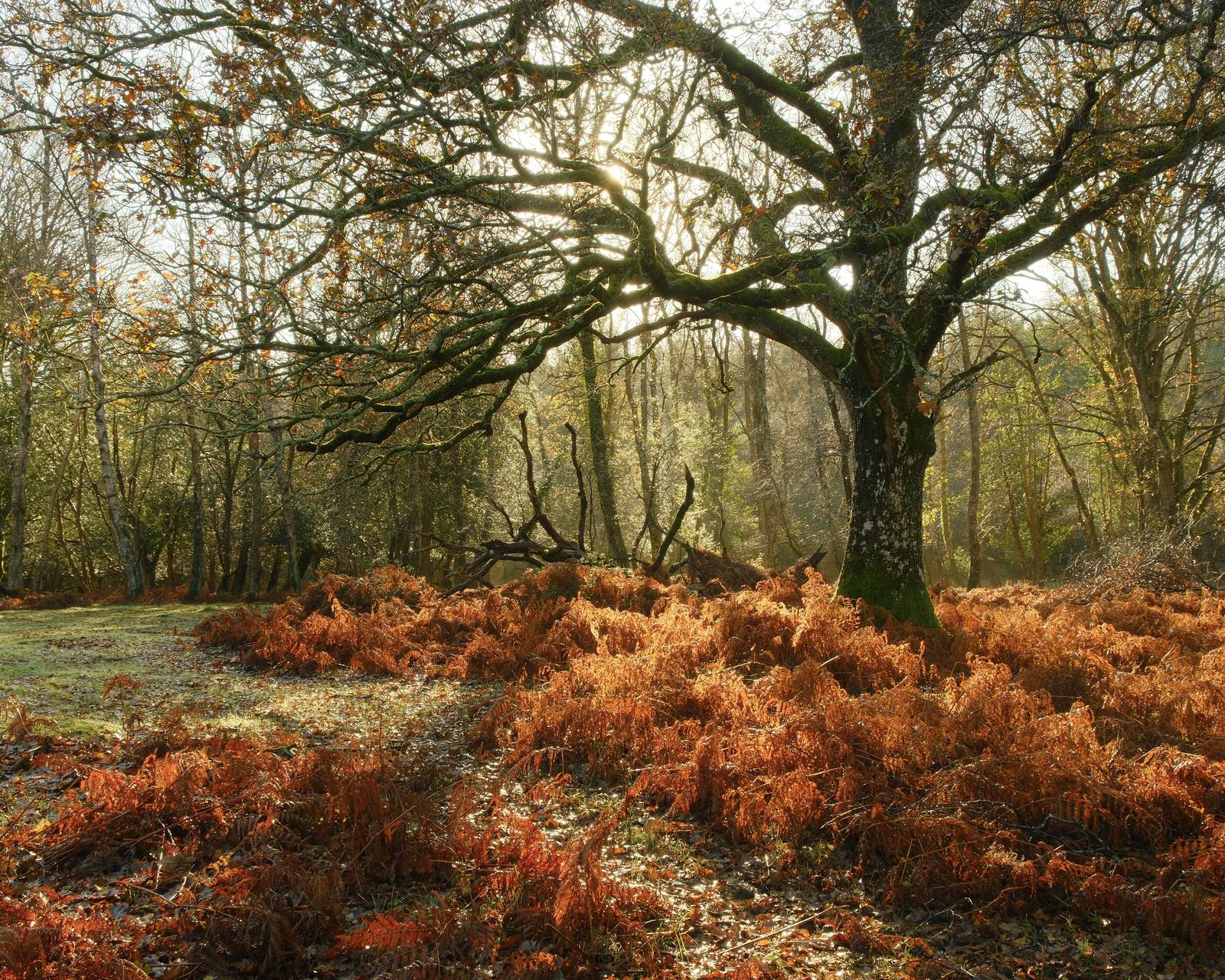
A cosy Astia film simulation recipe to boost any last splashes of fall color.
Over the past few weeks, I have been busy adding new recipe ideas to the upcoming Film Recipes App that I am trying my best to build. This has meant fewer recipe releases on the site, so I thought I should use the Thanksgiving holiday to pause for a moment, say ‘thank you‘ to all my readers for their support!
This recipe is designed to show off any last bits of fall color which, here in the UK, are now becoming harder to find. In a few more weeks, the trees will be bare and winter tones will be on our minds. For now though, let’s see if we can find some orange and red with this cosy film recipe. Have fun!
Ivy leaves in their end of season red, captured with the Thanksgiving film recipe.
Thanksgiving Film Recipe
Simulation: Astia/Soft
Grain Effect: Off
Colour Chrome Effect: Weak
Colour Chrome Blue: Weak (IV) / Off (V)
White Balance: 7500K
WB Shift: -4 Red, +4 Blue
Dynamic Range: DR400
Highlights: -0.5 (or 0)
Shadows: -1.5 (or 2)
Color: +2
Sharpness: 0
ISO Noise Reduction: -4
Clarity: -2
EV compensation: 0
Astia is a lovely film simulation to work with when you have colour in frame. Also see Waldorf Astia, Soft Power and Eldorado for more inspiration.
Hunting for November colour in the afternoon light. Thanksgiving film recipe.
A cold day on the beach, is still a day on the beach 🙂 Thanksgiving film recipe.
Afternoon light and the forms of ferns, caputed with the Thanksgiving film recipe.
Converted RAWs from back in the Springtime. Barcelona tennis with the Thanksgiving film recipe
Pine tree sunset, captured in the golden hour with the Thanksgiving film recipe.Go big with red, using the Thanksgiving film recipe.November in the forest, with the Thanksgiving film recipe
Blue skies and sunlight birch leaves, capturing Autumn with the Thanksgiving film recipe.What will you discover with the Thanksgiving film recipe?
Nostalgic Negative film recipe for autumn and fall colours. Works on X100VI, X-T5, X-T50, X-S20, X-H2S, X-M5
The Nostalgic Negative film simulation is one of the compelling extra looks that is present on the newer series of Fujifilm X-Series cameras. You can only find it on models such as the X100VI or X-T50, the tiny new X-M5, the X-T5, X-H2S and X-S20. The simulation has a unique look that is subtly different from the other simulations, perhaps most closely resembling Eterna when maxed out with a -4 shadow and +4 color setting.
One of the great attributes of Nostalgic Negative is the treatment of reds and oranges. There is an amber richness and magentism to them, and reds in particular can appear to jump off the page without looking too saturated. It’s this quality that I have looked to work with in the Scorpio film recipe, designed for autumn, but great for general use when a deeper tone and stand out reds are called for.
Made for autumn, the Scorpio film recipe has amber tones and glorious reds.
Scorpio Film Recipe
Simulation: Nostalgic Negative
Grain Effect: Off
Colour Chrome Effect: Weak
Colour Chrome Blue: Weak
White Balance: Fluorescent 3
WB Shift: +2 Red, -7 Blue
Dynamic Range: DR400
Highlights: -0.5
Shadows: +1.5
Color: -2
Sharpness: 0
ISO Noise Reduction: -4
Clarity: -3
EV compensation: -1/3
If you have an X-Trans IV series camera, you can try with Eterna/Cinema, +4 Shadows and +4 Color.
Deep and rich autumn tones, a blackberry vine with the Scorpio film recipeA sunny morning in the October woods, Scorpio film recipe
Bracken ferns are such fun to photograph as their colours start to turn, Scorpio film recipeTwisting spiral forms in the autumn hedgerow, captured with the Scorpio film recipePeeling paint on an abandoned boat, with the Scorpio film recipe
Sunset by the marina, with the deep tones of Scorpio film recipe
Discoveries on a Summer footpath, using the Scorpio film recipeA sunny fall morning in the park. Scorpio film recipeOak leaves in October, captured with Scorpio film recipe
Ambers, yellows and browns, all brought to life with the Scorpio film recipeBacklit in the morning sunlight, taken with Scorpio film recipe
Late afternoon and a golden tree, using Scorpio film recipe
Fishing cages and rops on the dock, in the late afternoon with Scorpio film recipe
Using the last few moments of sunlight in a Summer field. Scorpio film recipe
Eterna Bleach Bypass film recipe with deep contrast and nature tones
With so many film recipes available to choose between, you begin to find several that look quite similar. This deep tones look is a counter to all those soft creamy recipes designed to be a bit like Kodak Portra! Instead, this one brings a deep character, that sends shadows into inky blackness and draws attention to the highlights. I particularly enjoy using it on sunny mornings and in particulat on walks in autumn or winter woodlands.
It’s close cousin is my Vinterskog film recipe, but this one has a brown and gold, occasionally purple tone to it, where Vinterskog is more blue and green.
The base simulation for this film recipe is Eterna Bleach Bypass. I’ve discussed before how much I enjoy working with this, giving a wide range of looks, and something really quite unlike the output of any other camera brand. But, this does mean it is limited to a narrower selection of cameras. The new X100VI has it, but the popular X100V does not, for example.
If you have a camera that supports it, I really do recommend trying a number of Eterna Bleach Bypass recipes, especially in sunny conditions as autumn rolls in to the Northern hemisphere. Maybe it will become your favourite too?
Ecowarrior film recipe. Deep tones for an impactful image, especially in bright sunlight.
Ecowarrior Film Recipe
Simulation: Eterna Bleach Bypass
Grain Effect: Strong, Small
Colour Chrome Effect: Strong
Colour Chrome Blue: Off (IV) / Off (V)
White Balance: 7700K
WB Shift: 0 Red, +7 Blue
Dynamic Range: DR200
Highlights: +1.0
Shadows: +3.0
Color: +4
Sharpness: +2
ISO Noise Reduction: -4
Clarity: 0
EV compensation: -1/3
Ecowarrior film recipe (left), Vinterskog film recipe (right).
October in the UK is mushroom season, when the forest floor comes to life. Ecowarrior film recipeAutumn reds with deep impact, using the Ecowarrior film recipeEcowarrior film recipe gives images a high contrast look.
Autumn leaves show off their golden magic, with the Ecowarrior film recipeGreen leaves after the rain, using Ecowarrior film recipe
Brung out the deeper tones, with Ecowarrior film recipeYou won’t really know how much fun this recipe is, until you give it a try!Frosty edges to early morning leaf falls, Ecowarrior film recipeThe deep shadows work well when paired with bright light. Ecowarrior film recipe
Winter is an underrated season for photography. Frost and ice add new interest. Ecowarrior film recipeEcowarrior film recipe is great for showing the details in a sunny patch.Why not try Ecowarrior film recipe and see what new details you can capture?
Don’t let the season go by without giving Ecowarrior film recipe a try.
Kodak Color Film inspired film simulation recipe, based on Classic Chrome
The color prints that you see from early Kodak color film have a distinctive nostalgic quality that places them in their era. I love the aesthetic of these early photos, and hope that one day we will get a new film simulation that takes us back to these inspiring adventerous times.
In prints from this time, you often see strong blues in particular, with vivid blue eyes, bold skies and a general striking richness. Things didn’t look perfectly natural, but instead had a unique vibe that was possibly futuristic at the time, but nowadays is much more retro and charming.
In this film simulation recipe, I have tried to bring as much of this look as I can to a Classic Chrome set-up. It’s by no means a complete match, but I have very much enjoyed creating it, and testing it out on a variety of subjects. True to the plan, blues are vivid and striking, and the nostalgic feel is there, with an aged rendering of other colours. This means that it is better suited to more colourful scenes and might be fun when the subject is also from the 50s, 60s or 70s.
Go wild with the blues, using the Eastman Color film recipe
Eastman Color Film Recipe
Simulation: Classic Chrome
Grain Effect: Weak, Small
Colour Chrome Effect: Off
Colour Chrome Blue: Off (IV) / Off (V)
White Balance: Fluorescent 3
WB Shift: -5 Red, -7 Blue
Dynamic Range: DR100
Highlights: +1.0
Shadows: -1.0
Color: 0
Sharpness: 0
ISO Noise Reduction: -4
Clarity: -3
EV compensation: 0
A great companion on Autumn walks, Eastman Color film recipe
Cool tones and silhouettes after sunset, with the Eastman Color film recipe
A calm and relaxing day at the mountain lake. Eastman Color film recipeA minimalist sunrise, with Eastman Color film recipeA 1960s feel to the colours, with the Eastman Color film recipe
Summer scenes from an English hedgerow, using Eastman Color film recipeLooking across the bay. Captured in Mallorca with the Eastman Color film recipe
The cool tone of Eastman Color film recipe shows during the golden hour
Eastman Color film recipe is a great choice for capturing a mistly mood.
Mushroom discoveries in the December forest, using Eastman Color film recipeFrosted seed pods on a January morning. Eastman Color film recipe
Spring blooms in a Mallorca hotel garden, with the Eastman Color film recipe
Film Recipes based on Early Color Film
The early days of color film photography were an exciting period that opened up new possibilities for photographers. Here are a fwe film recipes inspired by the color films of yesteryear.
Classic Chrome film recipe for X-Trans IV and V cameras, with a Kodak look for outdoor photography
Whilst I like the beach and ocean as much as the next person, I live close to one, and so for vacations I often go to the mountains. In September, I took a trip to the Tirol, a mountainous region of Austria. I prepared a number of film recipes to take on my travels, trying to predict which settings would compliment the green meadows and blue skies of the high mountains.
I was sure that at least one of my recipes should be based on Classic Chrome, and this is the one that I came up with. I feel that it uses the teal tones of Classic Chrome in a subtle way, and balances this with the green of the lush meadows and forests.
I’ve given it a whirl on some RAW files from an earlier visit to the Barcelona tennis tournament, and some of the local lanes and fields near where I live. All-in-all, I’m pleased with the recipe, giving a consistent and controlled look that is distinctly Fujifilm, but with an analog softness to the tone that also feels reminiscent of Kodak 35mm. Although designed for the mountains, it’s a go everywhere film recipe for sunny conditions.
Blue skies above the ski lift pillars, captured with the Alpenchrome film recipe
Taking a photowalk in a Tirolean meadow, with the Alpenchrome film recipe
Scenes from a tennis tournament, using the Alpenchrome film recipeLet’s take a hike … with the Alpenchrome film recipe
Keeping an eye on the details, in the Austrian Tirol with Alpenchrome film recipeA country lane in Hampshire, captured with the Alpenchrome film recipe
Early summer grasses, using the tones of the Alpenchrome film recipeThe little train takes you up the mountain. Alpenchrome film recipe
Mountain views from 2,200m, taken with the Alpenchrome film recipe
Reala Ace film simulation recipe for trips and travel with X100VI, XT-5 and X-S20
When travel takes you to new places, it’s exciting to take photos of different scenes and in new environments. Sometimes, you can’t predict quite what you’ll find so you need a versatile film recipe with natural colour and an easy to use setting so you can capture whatever you come across with confidence.
I’ve given this recipe a try out in high mountains (where it was originally developed and gained its name), at a sporting event in very harsh light, and around the countryside and coast near where I live.
This film recipe uses the Reala Ace film simulation that is present on the newset cameras in the Fujifilm X-Series line up. This look is now the most naturally neutral of all the simulations, presenting colours with little variation from what our eyes percieve. It still has a film like feel, but is a less obviously Fujifilm look that other simulations.
I enjoy working with Reala Ace as a recipe base, especially for natural scenes and images including blue skies. Although I take few photos of people. it’s also a reliable choice for capturing faces and natural looking skin tones, which again gives it points for versatility and safety in varied situations.
In an alpine meadow with the Mountaineer film recipe, based on the Reala Ace simulation
Mountaineer Film Recipe
Simulation: Reala Ace (try Provia as an alternative on older cameras)
Grain Effect: Weak, Small
Colour Chrome Effect: Weak
Colour Chrome Blue: Strong
White Balance: Fluorescent 2
WB Shift: -2 Red, -4 Blue
Dynamic Range: DR200
Highlights: -1.0
Shadows: -1.0
Color: -4
Sharpness: +2
ISO Noise Reduction: -4
Clarity: 0
EV compensation: +1/3
When exploration turns up surprises, be ready with the Mountaineer film recipe
Misty with a touch of frost, and the Mountaineer film recipe
Scenes from a day at the Paris Olympics, using the Mountaineer film recipe
Natural details in natural colour, with the Mountaineer film recipe
Travel and transportation. Four different methods captured with the Mountaineer film recipeYep, I tried it in a wheatfield, like always. Mountaineer film recipe
Bright colours on a sunny day, using the Mountaineer film recipeLet’s go up the mountain, with the Mountaineer film recipe
Up above the town of Seefeld, using the Mountaineer film recipeFrame it … what will you capture with the Mountaineer film recipe?
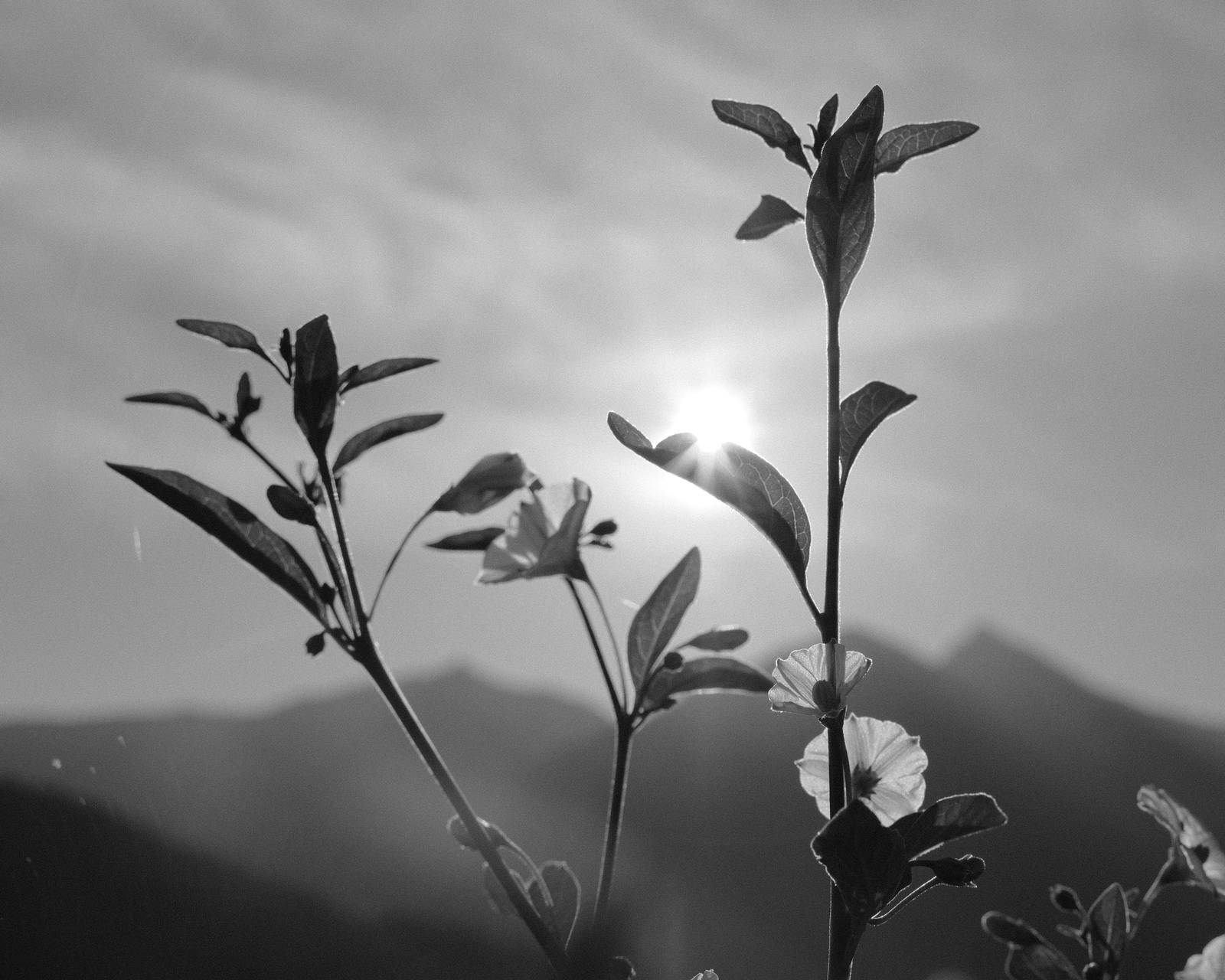
Monochrome film recipe for easy to use tones in landscape and travel photography
Towards the end of Summer, I ttok some vacation time in the mountains of Austria. As is typical for me, I thought a bit about which film recipes I might like to use when away, and thought that it was overdue the I tried out some black and white photography.
I’m not a particularly skilled photographer when it comes to black and white imaging, feeling that there is a different skill set, where people see more in the patterens of light and shade, than my usual territory of colour. For this reason, I tend to make mono film recipes that work well for me, who basically uses them to take exactly the same shots as I might in colour.
The advantage of these recipes perhaps is that they are easy to use for everyone, and will deliver decent results in a wide range of situations.
As it turned out, I found an additional benefit when using this look. The views across the mountains had quite a lot of haze, and often this washed out the colour of the more distant peaks, and could be distracting. With no colour in the image, this haze was magically erased, and any distracting colour wash was gone.
Features of this recipe include softened highlights, for easy use in bright conditions, and a strong grain, which adds a little extra character to shots. This grain doesn’t really show at the size of the images below, and of course is optional, should you prefer a smoother look.
A view down from the Rosshutte, using the Tirolean Mono film recipe
Mountain views, captured with the Tirolean Mono film recipe
Using the Tirolean Mono film recipe in misty and rainy weather.
Parkland views in bright sunshine. Tamed with the Tirolean Mono film recipe
Taking a boat trip on the Achensee, with the Tirolean Mono film recipe
Bright sunny conditions are easily handled by the Tirolean Mono film recipe
Capture the view, using the frame provided, or your own creativity. Tirolean Mono film recipeThe Rosshutte has cable care that lead off to the top of ski runs. Tirolean Mono film recipeYou can walk the slopes, or just admire the views. Tirolean Mono film recipeLate afternoon in the wheatfields, with the Tirolean Mono film recipe
I have a thing for photographing wheat in the golden hour! Tirolean Mono film recipeIn fact, I’ll be happy in any weather, like this mist. Tirolean Mono film recipe
A personal favourite combination … wheat, mist, spiderweb and morning sun. Tirolean Mono film recipeLooking up, with the Tirolean Mono film recipe
These last three were taken in Paris, although you might just have to trust me on that!
Classic Negative film simulation recipe for X100V, X100VI and compatible cameras
One of the observations made about Classic Negative in it’s unadjusted form is that greens can appear to have a blue tint to them. Correcting this is often one of the first steps taken by recipe makers, and I’ve done my share of this as well. However, what if we embraced this and worked with it and went all out for Classic Negative greens?
In this recipe, I wanted to specifically work with the colours of a pine forest, where there were already lots of green to capture. I’ve used a colour balance setting of Shade/Cloudy, with a -2, +4 shift. This doesn’t produce greens that are obviously blue, such as with Blue Monday, Glacier Blue or Fujicolor Natura, for example, but works to bring out a rich green tone, that is slightly cool in balance.
This recipe will of course take any type of picture, and the settings can be really great fun, but my intention was to produce something most useful in amongst pines, cedars, spruces and moody forests.
It’s all about the forest greens, with the Spruce Goose film recipe
Spruce Goose Film Recipe
Simulation: Classic Negative
Grain Effect: Weak, Large
Colour Chrome Effect: Weak
Colour Chrome Blue: Weak (IV) / Off (V)
White Balance: Shade
WB Shift: -2 Red, +4 Blue
Dynamic Range: DR200
Highlights: -1.5
Shadows: -0.5
Color: -2
Sharpness: +1
ISO Noise Reduction: -4
Clarity: 0
EV compensation: 0
Sunny pine fronds in an Austian forest, with Spruce Goose film recipe
Seeing what foresty things I discover on a walk in the Tirol. Spruce Goose film recipeAs Summer ends, the bracken is one of the first plants to change colour. Spruce Goose film recipeAfternoon light in the New Forest, captured with the Spruce Goose film recipe
Wild carrot seed heads are one of nature’s pretty things. Spruce Goose film recipeLet’s try out Spruce Goose film recipe around sunset by the water.
A summer sunset on the Solent, with cruise ship, swimmers, fishermen and families enjoying the warm evening. Tones are cooler than some recipes, with the Spruce Goose film recipeMushrooms are starting to appear in late August in the Tirol. Spruce Goose film recipeA little cluster surrounded by mosses and small plants. Spruce Goose film recipeLooking up in a Dutch woodland, Spruce Goose film recipe
The pine woods in the Loonse & Drunen Dunes National Park, using Spruce Goose film recipeLooking across Seefeld from our hotel in the Austrian mountains. Spruce Goose film recipeThe view from the top across the mountain tops, Spruce Goose film recipe
Shooting some mountain scenes with the Spruce Goose film recipeMore pines, but this time in Mallorca. Spruce Goose film recipe
Along the shore at Puerto Pollenca, Mallorca with the Spruce Goose film recipe
It’s time for pine, with the Spruce Goose film recipe
Nostalgic flat tones film recipe with a cinematic Fujifilm feel
You may have seen in some recent film recipes that I took a trip to Paris this Summer to watch the Olympic Games Tennis. I created a number of new recipes that would hopefully suit the hard light conditions, perhaps work well in the streets of Paris, and bring something uniquely Fujifilm to my images.
Of all the recipes that I explored, this one is perhaps the most characterful, with a strongly nostgalgic vibe, very flat tones for a soft look, and warmth in a subtle way. It’s a cinematic look film recipe with a summer vibe. If you’re guessing ahead, you’ll know that the Eterna Cinema film simulation shares many of these features, and that is indeed the base for this recipe.
The real magic though comes from the somewhat unusual colour balance based on a Fluorescent setting. There are three of these, which are intended to bring artificial light back to something more neutral, but I personally find that they can be a wonderful starting point for a film recipe. Matched to Eterna with its mellow undertones, we get a unique new look.
I quickly became addicted to using this, and took all sorts of photos before my trip to Paris, and whilst there I took my personal favourite image from the tennis tourament. This shot of Iga Swiatek preparing to serve had such a retro feel to it that I just love, but it also shows me that tennis is an individual sport with the player alone in the arena battling for the win.
Preparation. Iga is ready to serve. Birkenstock film recipe.
A perfect partner for hazy golden hour light. Birkenstock film recipeLet’s take a walk around the marina, with the Birkenstock film recipe
Faded colours and nautical looks, captured with the Birkenstock film recipe
Wearing their national colours with pride, Birkenstock film recipeSunny days by the river, Birkenstock film recipeLooking out across the lake, with the Birkenstock film recipeIt’s a sunny day. Let’s rent the swan pedalo and go out on the water! Birkenstock film recipe
Wandering with my camera, and the mellow tones of the Birkenstock film recipe
Misty conditions are great with a flat tone recipe, like Birkenstock with its -1 shadow setting
Stylish pinky bronze toned film simulation recipe for Fujifilm cameras
Here’s a tasty new style that brings a unique feel to your images. The Cherry Cola film recipe has a pink brown aesthetic that in some ways feels like an aged nostalgic look, but in others is a warm but unique look for characterful imaging. It’s for brave photographers looking to experiment, or to bring a strong look across a series of photos.
The base for this recipe is my ‘go to’ for unique styles, Eterna Bleach Bypass, which is pushed into new creative territory with unique color tone from Fluorescent 1 balance with a heart shift of +8 red and -5 blue.
There’s no escape for any colour or subject in scenes with this. They will all yield and get bathed in the pinky bronze tone. It’s a recipe to go large with and embrace the results.
This recipe works well on any camera that has the Bleach Bypass film sim, such as X-T4, X100VI or X-S20. If you want to explore a similar aesthetic, but don’t have Eterna Bleach Bypass, you might enjoy the Seventies Summer film recipe, or Sherbert Sunrise look, which both explore a pink toned style.
Here are my samples, taken with, or edited from RAWs on my X-S20 in the past few months.
Pinky bronze tones in the afternoon light. Bluebells with the Cherry Cola film recipe.
Cherry Cola Film Recipe
Simulation: Eterna Bleach Bypass
Grain Effect: Weak, Small
Colour Chrome Effect: Off
Colour Chrome Blue: Weak (IV) / Off (V)
White Balance: Fluorescent 1
WB Shift: +8 Red, -5 Blue
Dynamic Range: DR400
Highlights: -1.0
Shadows: -1.0
Color: -1
Sharpness: -4
ISO Noise Reduction: -4
Clarity: -4
EV compensation: -1/3
Summer grasses with Cherry Cola. A fun subject in the golden hour light.Walking the dog along the shore. Sunset by the sea, with Cherry Cola film recipeA foggy dawn, toned for a new look with Cherry Cola film recipe
A musty sunrise, captured earlier this Springtime, with the Cherry Cola film recipeWheatfield symmetry, using the Cherry Cola film recipeThe morning sun highlights the wheat leaves. Cherry Cola film recipeAn Oyster, washed up onto the beach. Colour by Fujifilm and the Cherry Cola film recipe
There’s so much to find along a beach at low tide. Cherry Cola film recipe
Sunny day wandering in the New Forest, with the Cherry Cola film recipe
At the marina in the afternoon, with Cherry Cola film recipeFrosted leaf, captured with the Cherry Cola film recipeUsing a macro extension tube to get in to the details. Cherry Cola film recipeYou can see new details in spring blossom. Cherry Cola film recipe
Floral details captured with the Cherry Cola film recipeLooking across the bay, using the Cherry Cola film recipe